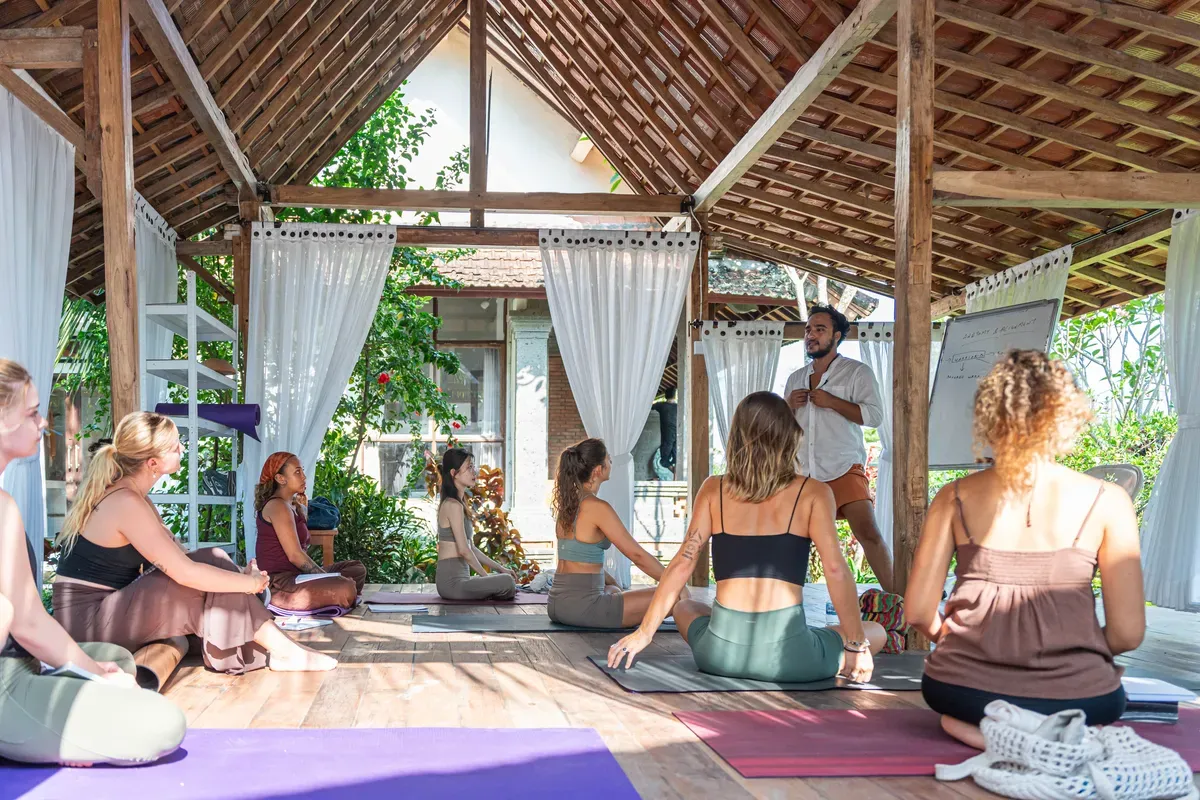
Choose this if you want a shorter introduction to teacher training. No prior experience is needed.
Rooms from$950
- 10days of training
- 15–20students per class
- 10subjects studied
Yoga teacher training
Choosing between the 100, 200 or 300 hour yoga teacher training in Bali comes down to where you are today: new to yoga, a regular practice, or a 200-hour certificate already. Here is what each course asks of you, what you study, which certificate you get and what it costs.
EnquireChoose this if you want a shorter introduction to teacher training. No prior experience is needed.
Rooms from$950
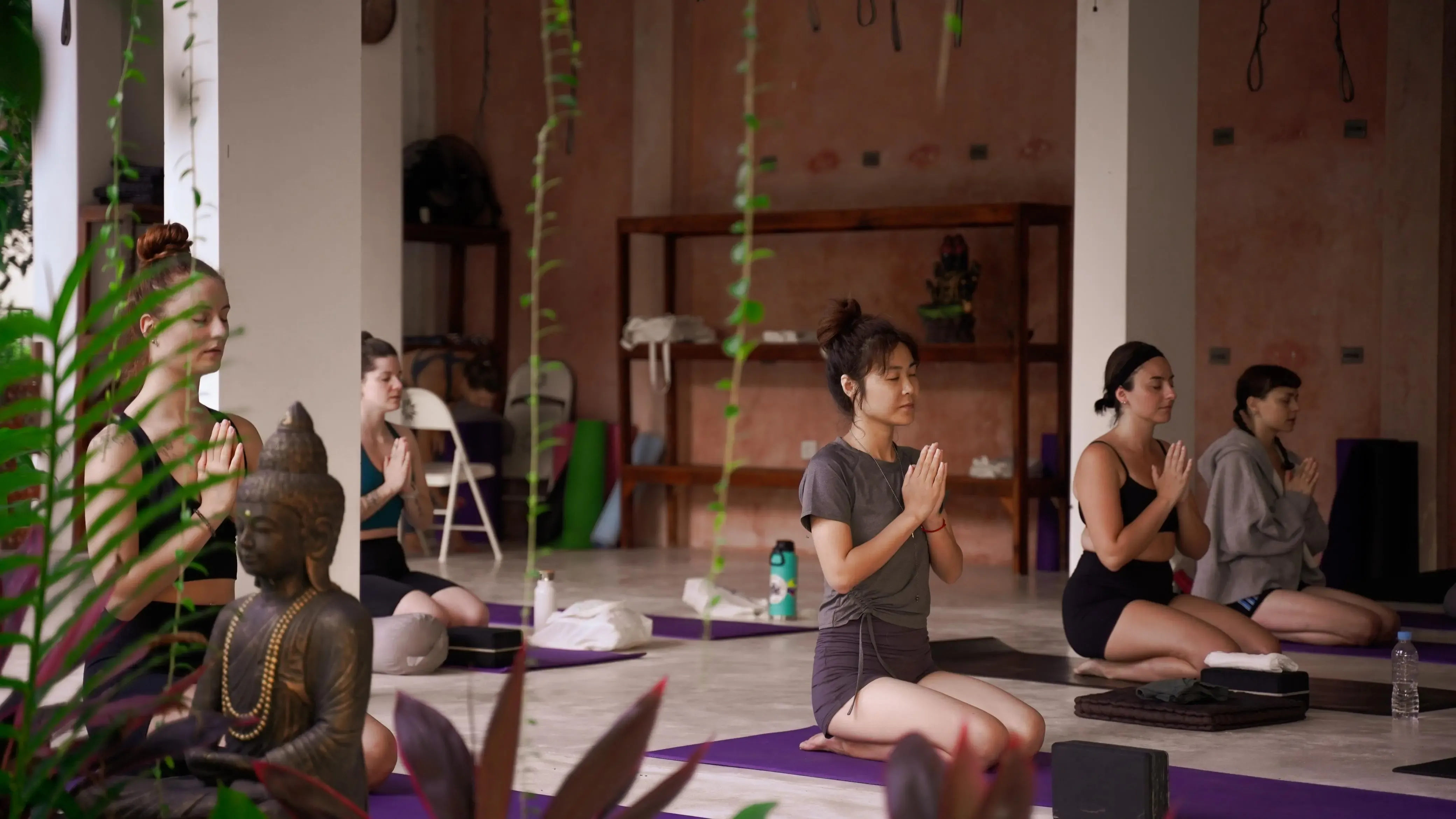
Choose this if you want the first level of teacher training. No prior experience is needed.
Rooms from$1,126
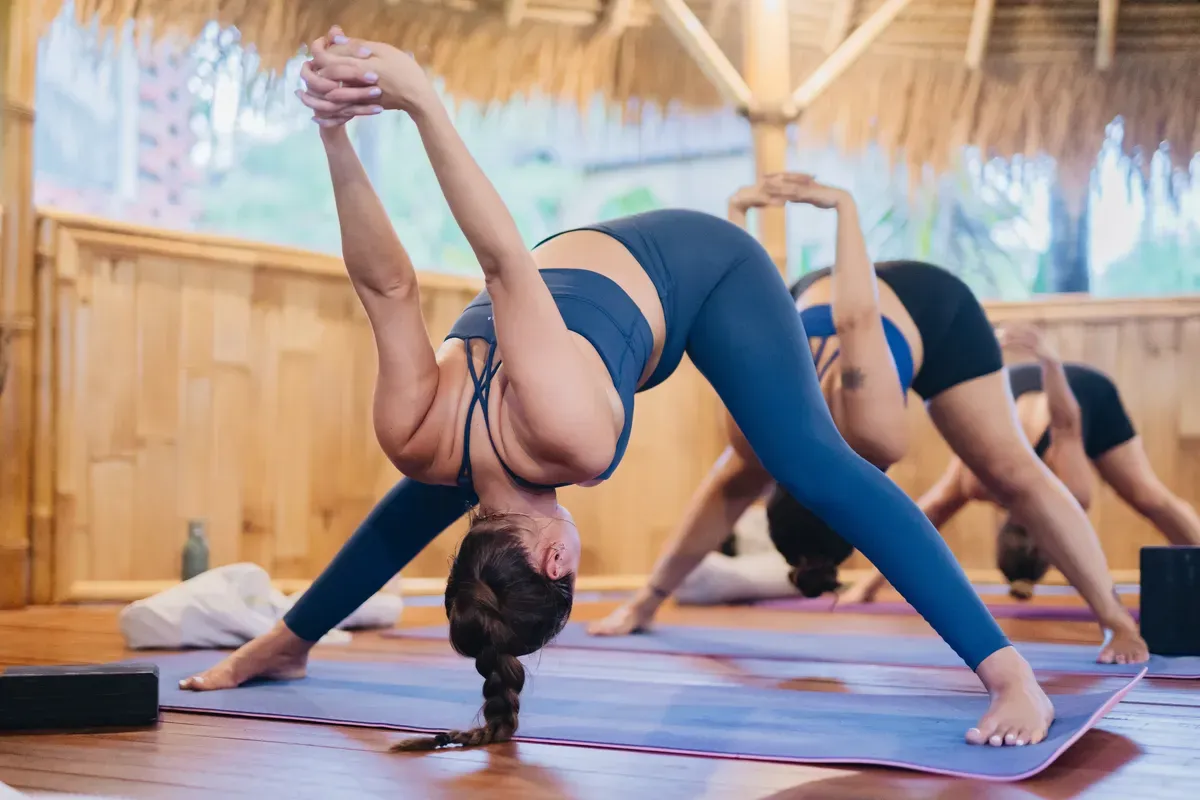
Choose this for advanced training, after a 200-hour or straight away.
Rooms from$1,818
Prices in USD per person, from the school's price list, checked 8 Oct 2026.
Length, group size, certificate and price side by side. Point at a course to follow its column; each name links to its profile below.
| 100hoursExplore & Deepen | 200hoursLearn to Teach | 300hoursAdvance Your Practice | ||
|---|---|---|---|---|
| Who it is for | Entry requirement | No experience needed | No experience needed | No 200-hour certificate needed |
| The course | Length | 10 days | 20 days | 26 days |
| Class size | 15-20 students | 15-20 students | 15-20 students | |
| Styles | Hatha, Vinyasa, Philosophy | Hatha, Vinyasa, Ashtanga | Advanced Hatha, Vinyasa, Meditation | |
| What you get | Certificate | CertificateOf completion, not Yoga AllianceHow the 100-hour certificate works | RYS 200 & 500Yoga Alliance registered schoolHow the 200-hour certificate works | CertificateOf completion, from the schoolHow the 300-hour certificate works |
| Cost per person | Twin Shared Room | $950 | $1,467 | $1,818 |
| Private Room | $1,302 | $1,984 | $2,335 | |
| 6 Shared Female-Only | Not listed | $1,126 | Not listed | |
| 4 Shared Female-Only | Not listed | $1,209 | Not listed | |
| Next step | Enquire about the 100-hour courseFull 100-hour course details | Enquire about the 200-hour courseFull 200-hour course details | Enquire about the 300-hour courseFull 300-hour course details | |
Included in the price Includes accommodation, three vegetarian meals a day, airport transfer from DPS, course materials and certification.
A new batch of every course starts on the 1st of each month. We check the exact date with the school before you book.
Facts are from the school's website and are not yet confirmed in writing by the school. Prices in USD per person, from the school's price list, checked 8 Oct 2026.
Who each course suits, what you study and how its certificate works. For the daily schedule, teachers and reviews, open the full course page.
Explore & Deepen
Ubud, Bali
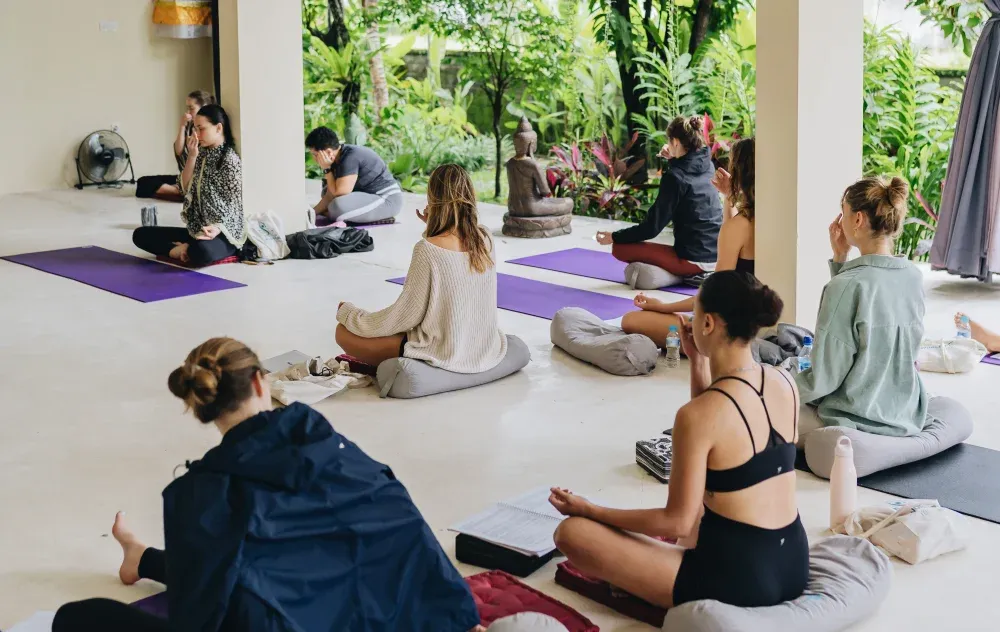
A 100-hour yoga teacher training in Ubud, Bali, covering Hatha, Vinyasa and Philosophy over 10 days, in classes of 15-20 students. Level: Beginner. Entry requirement: No prior experience needed.
Asana, pranayama and the basics of yoga philosophy
Choose this if you want a shorter introduction to teacher training. No prior experience is needed.
The school's certificate of completion, not a Yoga Alliance credential How the 100-hour certificate works
Learn to Teach
Ubud, Bali
A 200-hour yoga teacher training in Ubud, Bali, covering Hatha, Vinyasa and Ashtanga over 20 days, in classes of 15-20 students. Level: Intermediate. Entry requirement: No prior experience needed.
Hatha, Vinyasa and Ashtanga, with pranayama, anatomy, mantra chanting and teaching methodology
Choose this if you want the first level of teacher training. No prior experience is needed.
The school's certificate; you apply to Yoga Alliance yourself for RYT 200 How the 200-hour certificate works
Advance Your Practice
Ubud, Bali
A 300-hour yoga teacher training in Ubud, Bali, covering Advanced Hatha, Vinyasa and Meditation over 26 days, in classes of 15-20 students. Level: Advanced. Entry requirement: No 200-hour certificate needed.
Anatomy, alignment and teaching practice, after a 200-hour or straight away
Choose this for advanced training, after a 200-hour or straight away.
The school's certificate of completion; RYT 500 eligibility is the school's claim, not confirmed How the 300-hour certificate works
All three courses list the same subjects. The school doesn't publish hours per subject, so none are shown here.
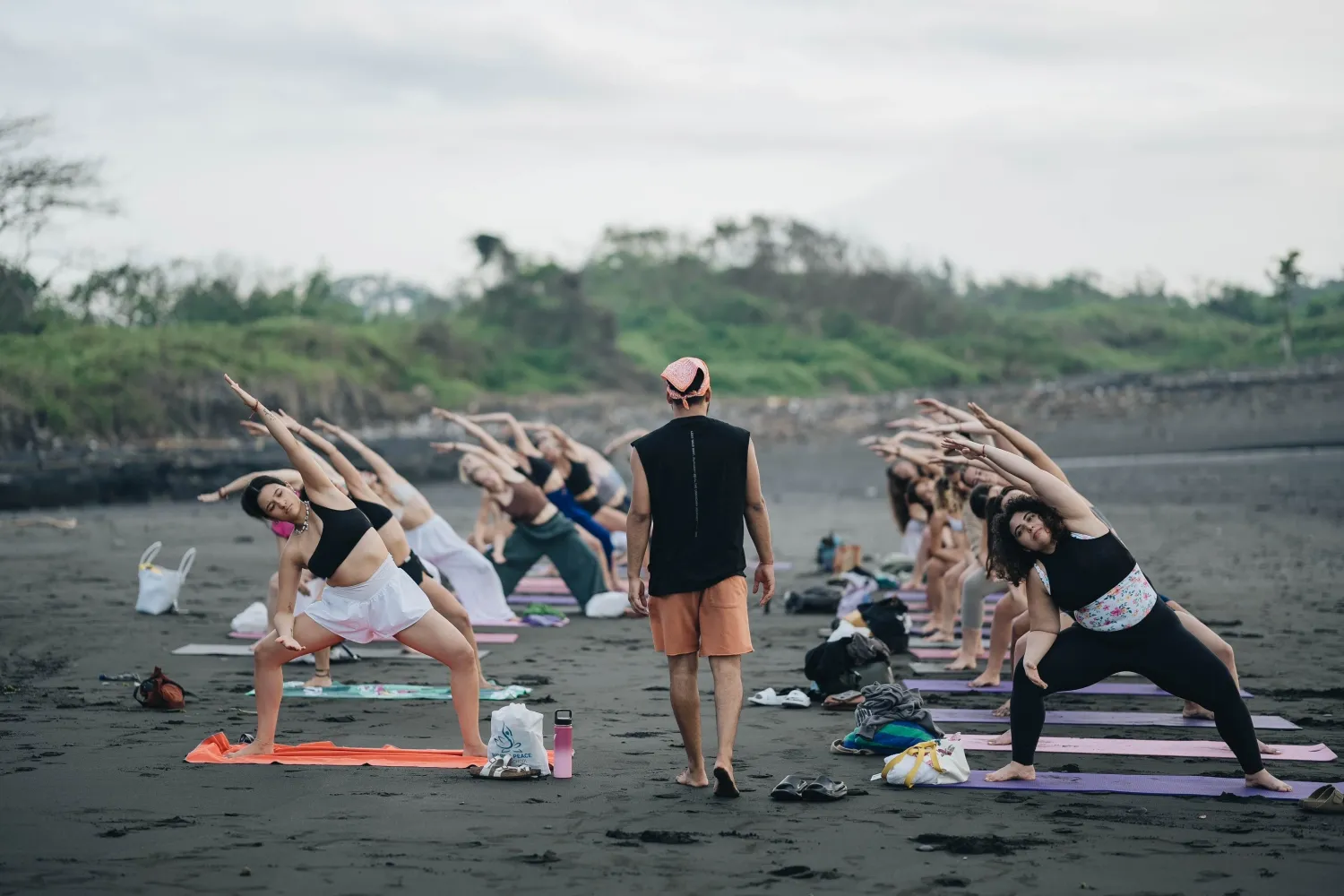
Asana is the physical practice, with 3 hours of asana a day. You work through the Pawanmuktasana series and Surya Namaskar, then standing, sitting, back-bending and forward-fold postures, arm balances and inversions, and learn how to sequence them.
Pranayama is the study of breath control. You learn how breathing works in the body, then practise techniques including Nadi Shodhana, Kapalabhati, Ujjayi, Bhramari, Sheetali and Sheetkari, along with the three bandhas and mudras in pranayama.
Meditation covers the main approaches and how to build a practice of your own. You also learn how to teach meditation to others, and how to bring it into yoga classes and daily life.
Mantra chanting introduces chanting and its place in yoga. You learn Sanskrit pronunciation and basic vocabulary, then mantras including Om, Shanti, Gayatri, Mahamrityunjaya and Om Namah Shivaya, and how to use chanting in a class.
Anatomy and physiology links the body's systems to yoga practice. You study the skeletal, muscular, respiratory, nervous, circulatory and digestive systems, common injuries, and how to modify practice for different bodies.
Alignment and adjustment teaches how to position the body safely and how to guide others. You learn the alignment of basic asanas, how to spot common misalignments, and how to give verbal and hands-on adjustments, including the ethics of touch.
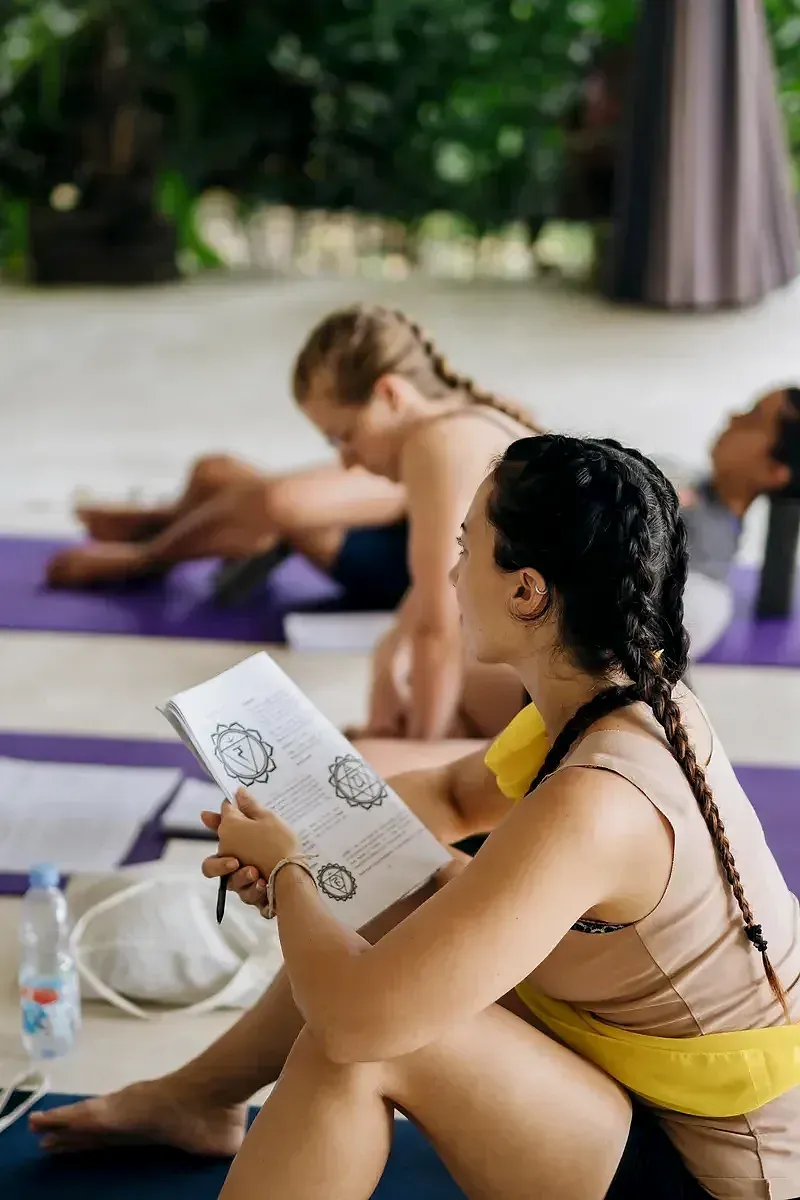
Philosophy places the practice in yoga's wider tradition and everyday life. The texts and ideas include Patanjali's Yoga Sutras, the Eight Limbs, the Bhagavad Gita, the three Gunas, karma and dharma, with Ayurveda and the chakra system.
Mudras and bandhas covers hand, head, postural, lock and perineal mudras and the bandhas, with their benefits and precautions and how they are used in asana, pranayama and meditation. You also practise teaching them.
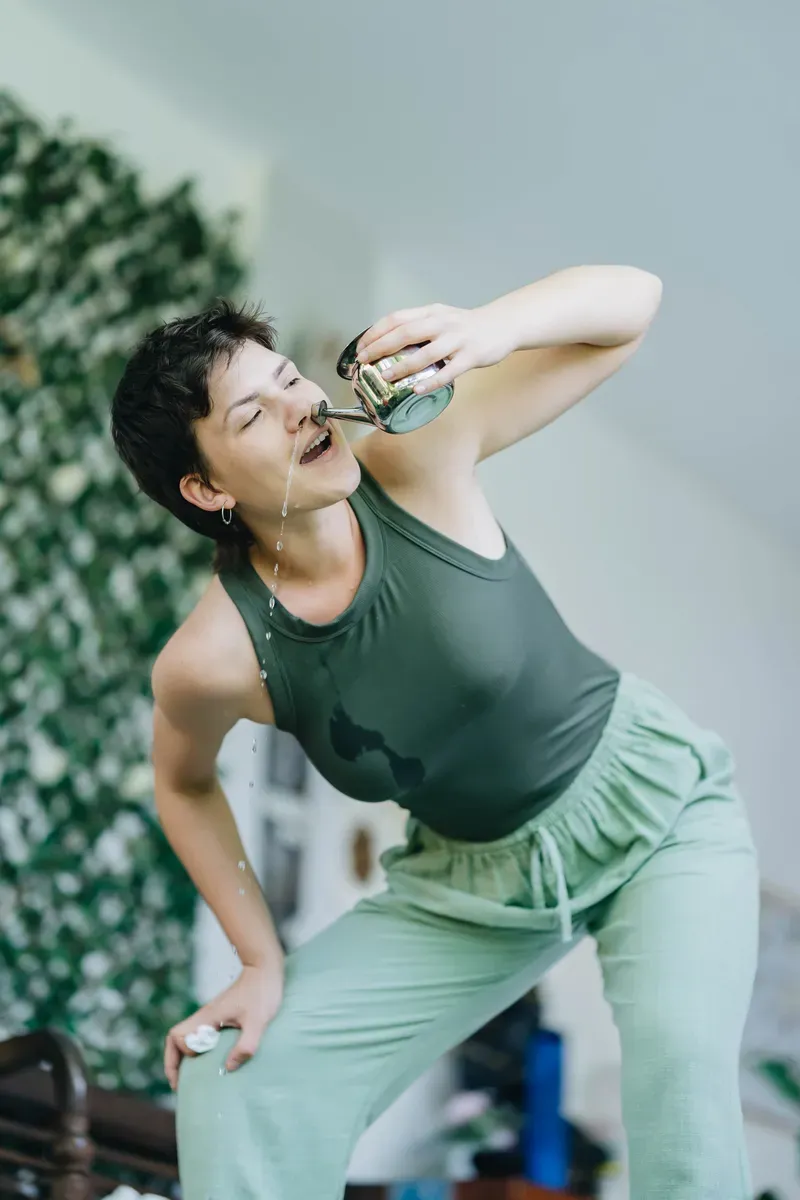
Shatkarmas are traditional cleansing practices. The syllabus lists nasal cleansing, cleansing of the digestive tract, abdominal massage (nauli), colon cleansing and trataka, a meditative gazing practice.
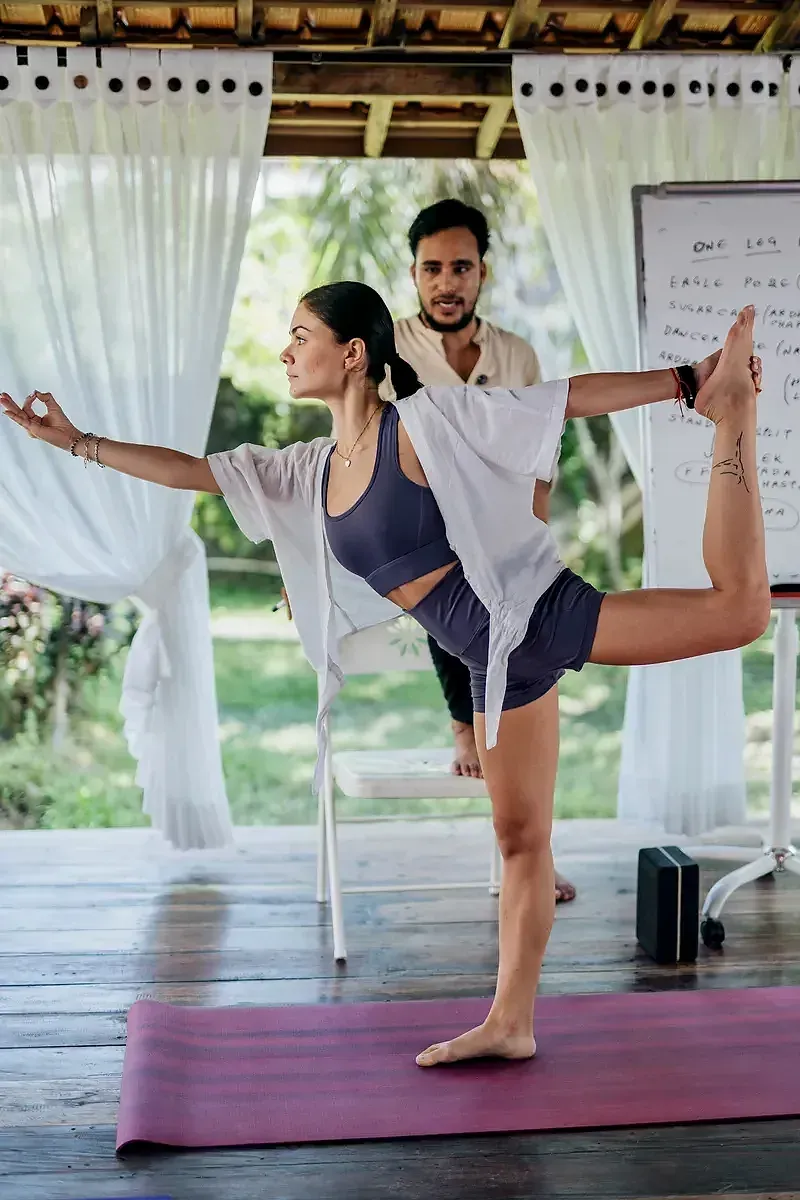
Teaching methodology prepares you to lead a class. You work on clear instructions, lesson planning and sequencing, classroom management and professional ethics, with practice teaching and feedback from trainers and other participants.
Which training, which dates, which room — ask us and we'll help you work it out.
EnquireCertificate wording follows Yoga Alliance's own requirements and the school's website, and is not yet confirmed in writing by the school. Yoga Alliance's certificate requirements (opens in a new tab).
How the courses connect
Each course has its own entry requirement. Start with the one that matches where you are today.
100 hours
10 days
No prior experience needed
100-hour course details (opens that course page)Ready for certification? See the 200-Hour (opens that course page)200 hours
20 days
No prior experience needed
200-hour course details (opens that course page)Want to go deeper? See the 300-Hour (opens that course page)300 hours
26 days
No 200-hour certificate needed
300-hour course details (opens that course page)Entry requirements are the wording on the school's website and are not yet confirmed in writing.
Before you choose
Straight answers about choosing a course. For anything else, ask us.
Yoga Alliance's RYT 200 credential is based on a 200-hour training at a Yoga Alliance registered school. Studios set their own hiring requirements, so check with the ones you want to teach at.
No. The 100-hour course ends with the school's own certificate of completion. Yoga Alliance's Registered Yoga Teacher credential (RYT 200) needs a 200-hour training at a registered school.
Yes, the school says you can. The 100 hours don't count toward the 200-hour course, so you take the full 200-hour training.
The school says completing it makes you eligible to register with Yoga Alliance as an RYT 500. RYT 500 needs a 200-hour training as well, so if you join without one you would also need a 200-hour. Yoga Alliance decides each application, and we haven't confirmed how the school's 300-hour course is registered, so ask us before you book and we'll check with the school.
Planning your Bali yoga journey?
Which training, which dates, which room — ask us and we'll help you work it out.
Common questions we can help with
No booking pressureNo cost to you