
Pawanmuktasana Series
Asana FoundationsA systematic series of subtle joint-freeing and abdominal movements. It serves as physical preparation before dynamic asana practice.
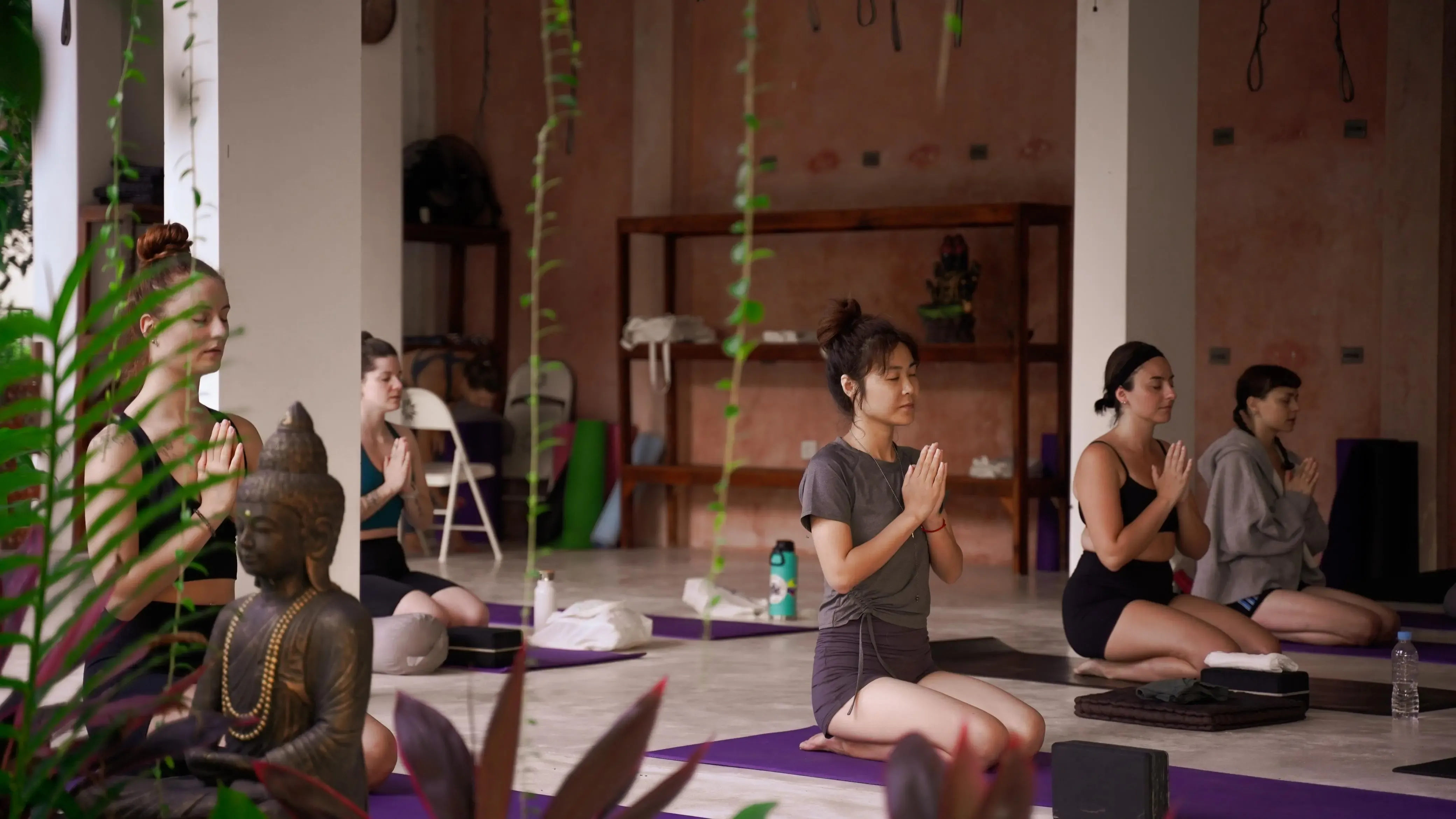
Ubud, Bali — 200 hours — 20 days
A 200-hour yoga teacher training is the first level of teacher training. This course covers Hatha, Vinyasa and Ashtanga over 20 days in Ubud.
 Not sure which course?See how it compares with the others.
A 200-hour yoga teacher training is the first level of teacher training that Yoga Alliance registers. This one runs 20 days in Ubud, Bali, with 15–20 students per class.
Ratings checked 25 Sept 2026.
Yoga Alliance's current standard for a registered 200-hour training, in force for newly registered schools since 27 February 2020, sets hours for four areas. Schools registered earlier may still be on the previous five-area standard. The 300-hour course here asks for a 200-hour certificate first.
SourceYoga Alliance, Standards for RYS Credentials (PDF) (opens in a new tab)
The school's syllabus covers each of those areas. It lists topics rather than hours per subject, so no hour split is shown here.
SourceThe school's published syllabus
Classes run Monday to Saturday, with Sundays off. A day starts at 06:30 with pranayama and meditation and ends with dinner at 19:00: Ashtanga-style asana in the morning, a lesson block on teaching methodology, anatomy and alignment, philosophy in the afternoon, then a slower Hatha class and kirtan. A rest or self-study slot sits after lunch.
SourceThe school's daily timetable
The school's certificate, and the skills to plan and sequence a class, teach breath and meditation, explain the body and adjust with care. The school is a Yoga Alliance Registered Yoga School, so you can use the certificate to apply for RYT 200 registration yourself. Yoga Alliance decides the application.
SourceYoga Alliance, certificate requirements (opens in a new tab)
See the full curriculumSee the daily scheduleHow the certificate works
balance
+3%
on card payments
Pay in cash or by card on the day you arrive.
who you pay
Yoga Training Path doesn't take payment.
refunds
If you withdraw from the course, they are also non-transferable.
if you cancel
2 years to rejoin
Within two years, with no new deposit.
Source: The school's payment page, read 4 Nov 2026. These are the school's terms, not ours. Check them with the school before you pay.
We send students to one school in Ubud, so we'd rather tell you what doesn't fit now than after you've booked flights.
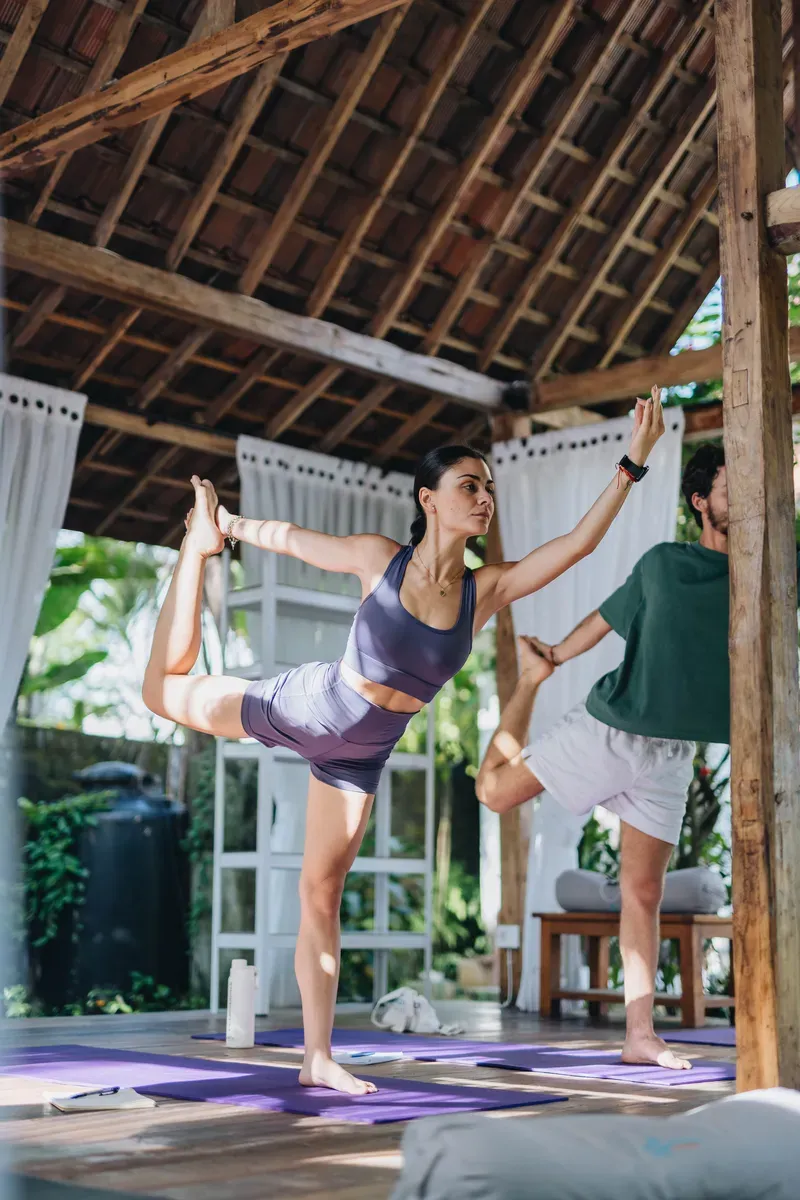
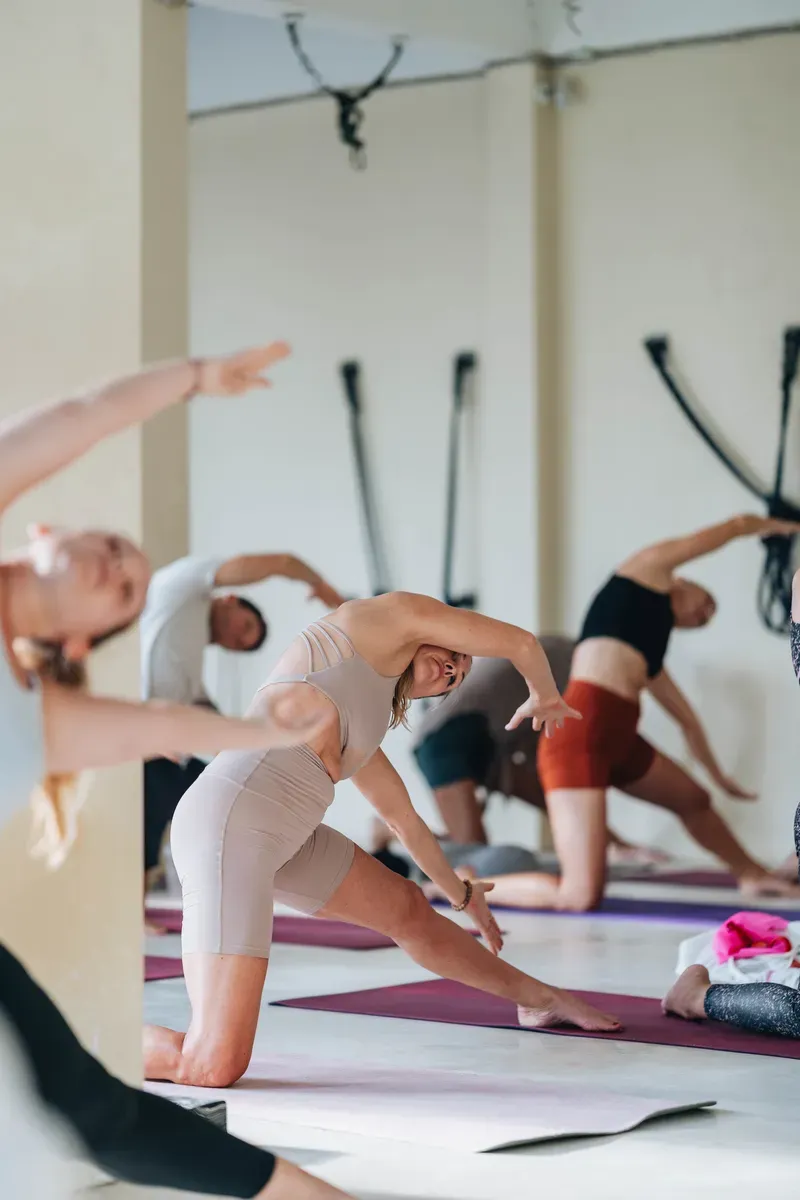
You want to start teaching
You finish with the school's certificate and can apply to Yoga Alliance for RYT 200 registration.
You're new to teacher training
The school's website says no prior experience is needed.
You can give it 20 full days
Classes run Monday to Saturday, from 06:30 to 18:30, with Sundays off. Plan to rest on Sundays rather than sightsee.
Not sure which side you're on?
Tell us a little about you and we'll say honestly whether this course suits you.
You want to specialise in a single style
The 200-hour mixes these styles: {style:course-200-hour}.
You already hold a 200-hour certificate
Then the 300-hour is your next step, not a repeat.
300 Hour Yoga Teacher TrainingYou need a part-time or online course
All three courses are full-time and in person in Ubud, Monday to Saturday (Saturday is a half day).
You can't commit to full attendance
The school expects every class, except for illness or a personal emergency.
You want to drink or smoke during the course
The school has a no-alcohol, no-smoking rule.
You eat meat or fish
The meals the school serves are vegetarian.
You're picturing a beach town
Ubud is inland. For surf and beach cafés, Canggu or Uluwatu suit better.
These points come from the school's own website. The school hasn't confirmed them to us in writing yet.
A new batch starts every month. Each one runs from the 1st to the 20th. Choose a month to see its dates and the rooms.
to
Ask us for the next start dates. We'll confirm the exact date with the school.
Choose a room to see what its price includes.
Prices are in USD per person, from the school's price list, checked 8 Oct 2026. Other currencies are approximate conversions from USD. An advance payment of $300 is paid to the school. It is paid by PayPal and comes off the course fee. Tuition is only part of the cost of the trip: see the estimated total, with flights, visa and extras.
Not sure which room? Enquire. Going with a friend? Share this batch on WhatsApp.
These dates follow the school's monthly batches, which the school has confirmed to us. Later months follow the same pattern. We check the exact date with the school before you book.
10 subjects bound into 3 study volumes —
spanning physical embodiment, classical philosophy, and hands-on teaching methodology.
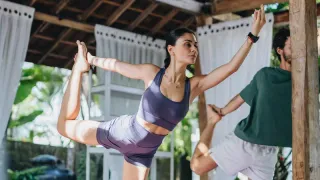
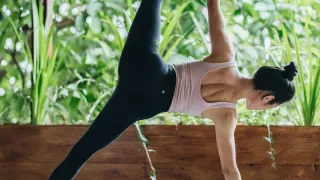
Pawanmuktasana series A, Surya Namaskar (Hatha), Virabhadrasana A & B, Utthita Trikonasana, Parsvakonasana, Parivrtta Parsvakonasana, Parivrtta Trikonasana, Parsvottanasana
Sitting postures: Bharadvajasana, Merudanda Vakrasana, Ardha Matsyendrasana, Ardha Ustrasana, Bhujangasana, Ardha Salabhasana, Paschimottanasana, Janu Sirsasana, Purvottanasana, Pawanmuktasana series B
Pawanmuktasana C / A, Surya Namaskar B, Trikonasana, Parsvakonasana, Virabhadrasana A, Virabhadrasana B, Ardha Chandrasana, Virabhadrasana C, Utthita Hasta Padangusthasana A / B, Vrikshasana, Garudasana
Sitting postures: Marichyasana A, Marichyasana B, Marichyasana C
Back bending postures: Ustrasana, Rajakapotasana, Dhanurasana, Chakrasana, Setu Bandhasana
Forward folds: Paschimottanasana, Janu Sirsasana, Triang Mukha Eka Pada Paschimottanasana, Gatyatmak Paschimottanasana, Purvottanasana
Inversions: Sarvangasana
Core exercises
Sun salutation A / B / C (Hatha), Sequencing, Virabhadrasana A & B, Trikonasana, Parivrtta Trikonasana, Parsvakonasana, Parivrtta Parsvakonasana
Arm balances: Bakasana, Mayurasana, Eka Pada Baka Dhyanasana, Parsva Bakasana, Dwi Hasta Bhujasana, Vashisthasana, Vrischikasana, Koundinyasana, Astavakrasana
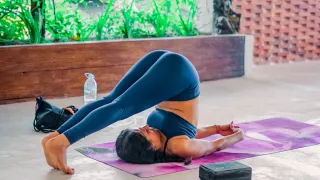
Inversions: Sarvangasana, Sirsasana, Halasana, Karnapidasana
Matsyasana, Savasana, Teaching methodology

Terms explained
Short explanations of the terms used in this subject. General background, not the school's own text.
A systematic series of subtle joint-freeing and abdominal movements. It serves as physical preparation before dynamic asana practice.
A classical sequence linking breath (prana) with continuous movement (vinyasa) across twelve postures. Practiced in both traditional Hatha and dynamic variations.
Foundational standing poses (including Trikonasana, Virabhadrasana series, and Parsvakonasana) that establish root stability, open the hips, and develop core equilibrium and pelvic alignment.
Ground-level postures (such as Bharadvajasana, Ardha Matsyendrasana, and Marichyasana) focused on spinal rotation and pelvic mobility, traditionally used to prepare for sitting in meditation.
Spinal extension postures such as Bhujangasana, Ustrasana, and Dhanurasana.
Calming postures (such as Paschimottanasana and Janu Sirsasana) that gently stretch the hamstrings, gluteals, and spinal erectors, traditionally linked with inward sensory withdrawal (pratyahara).
Hand-supported postures (including Bakasana, Mayurasana, and Vashisthasana) requiring coordinated engagement of wrist stabilizers, serratus anterior, and abdominal deep stabilizers alongside mental composure.
Postures where the head rests below the heart (such as Sarvangasana, Halasana, and Sirsasana).
The pedagogical science of ordering postures logically from gentle joint preparation and warm-up flows to a peak posture, followed by neutralizing counterposes and final restorative rest (Savasana).

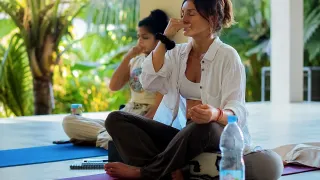
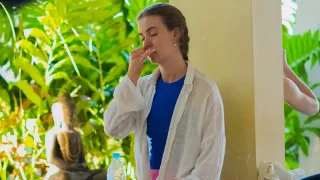
Terms explained
Short explanations of the terms used in this subject. General background, not the school's own text.
The physiological study of respiratory muscles, diaphragmatic descent, intercostal expansion, and alveolar gas exchange, examining conscious control of tidal volume.
A foundational breath-balancing practice using Vishnu Mudra to regulate inhalation and exhalation rhythmically through alternating nostrils, traditionally balancing the Ida (cooling) and Pingala (heating) channels.
A vigorous breathwork technique characterized by active, rhythmic abdominal exhalations and effortless passive inhalations. Traditionally categorized as a cleansing kriya.
A steady breath generated by gentle partial constriction of the glottis during both inhalation and exhalation. The resulting soft oceanic whisper provides an auditory focus point while cultivating internal warmth.
A practice where exhalation is accompanied by a gentle, steady humming tone. Frequently combined with Shanmukhi Mudra, it is traditionally used to draw sensory awareness inward.
Specialized breathwork practices where air is drawn in across a curled tongue (Sheetali) or through teeth with tongue tip pressed against the palate (Sheetkari), traditionally used to cool thermal sensation and quiet irritability.
The conscious application of internal muscular seals (Mula, Uddiyana, and Jalandhara Bandha) during breath retention (kumbhaka) to contain and channel vital energy along Sushumna nadi.
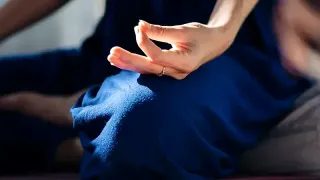

Terms explained
Short explanations of the terms used in this subject. General background, not the school's own text.
The anatomical and energetic locks of Hatha Yoga: Mula (pelvic floor lift), Uddiyana (upward abdominal draw), and Jalandhara (throat lock), culminating in Maha Bandha (the Great Lock).
Gestures and seals traditionally grouped as hand (Hasta), head (Mana), postural (Kaya), lock (Bandha) and perineal (Adhara) mudras, used to direct attention and subtle energy during meditation and pranayama.


Terms explained
Short explanations of the terms used in this subject. General background, not the school's own text.
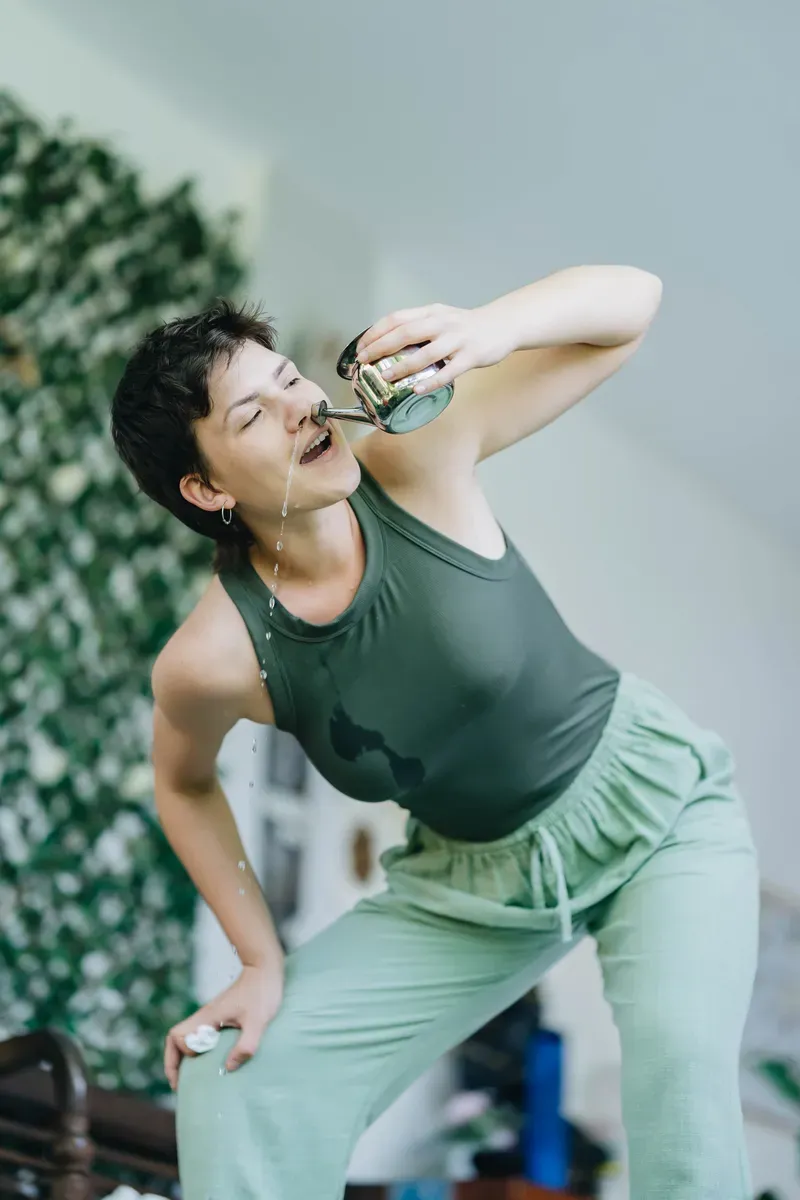
The classical nasal irrigation practice using lukewarm isotonic saline solution poured through a neti pot.
An advanced classical kriya where a specially prepared soft cotton cord or sterile rubber catheter is guided through the nasal passage into the throat, performed strictly under qualified teacher supervision.
The classical abdominal churning practice that isolates the rectus abdominis muscles (Madhyama, Vama, and Dakshina Nauli), practiced empty-stomach.
A classical Hatha Yoga purification kriya aimed at the colon, described in traditional Hatha texts.
The practice of steady, unblinking gazing at an external focal point—commonly a candle flame (Jyoti Trataka) or symbolic dot—training ocular nerves, cleansing the tear ducts, and sharpening inner concentration.
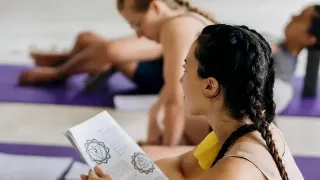
Terms explained
Short explanations of the terms used in this subject. General background, not the school's own text.
The foundational classical text outlining the progressive eightfold path: social ethics (Yama), personal observances (Niyama), posture (Asana), breath (Pranayama), sensory withdrawal (Pratyahara), concentration (Dharana), meditation (Dhyana), and integrated absorption (Samadhi).
A core philosophical dialogue exploring duty, detachment, and purpose through Karma Yoga (selfless action), Bhakti Yoga (devotional surrender), and Jñāna Yoga (experiential self-inquiry).
The Samkhya model of material nature's primary qualities: Sattva (clarity, balance, luminosity), Rajas (passion, agitation, movement), and Tamas (inertia, heaviness, resistance), and how they manifest in mind and lifestyle.
Exploration of intentional action, consequences, and personal alignment with cosmic and ethical duty (Dharma), providing philosophical guidance for conscious living and ethical teaching.
The traditional energetic map of the human organism: the seven central chakras, subtle energetic conduits (nadis), and the five multidimensional sheaths of being (Pancha Koshas).
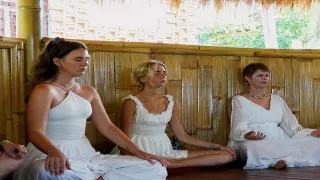
Terms explained
Short explanations of the terms used in this subject. General background, not the school's own text.
A classical seated practice originating in ancient Himalayan ascetic traditions, guiding practitioners past cognitive activity into restful, non-reactive witness consciousness (sakshi bhava).
The exploration of audible vibrations (singing bowls, bell overtones, chimes) as acoustic anchors, assisting the practitioner in detaching from discursive internal dialogue and tuning into internal stillness.
A foundational mindfulness technique involving non-judgmental observation of natural, unmanipulated airflow at the nostrils or abdomen, training single-pointed mental concentration (ekagrata).
The study of traditional mental hindrances—restlessness (vikshepa), physical dullness (laya), and mental wandering—paired with concrete posture adjustments and focal cues to maintain alertness.
Practical training in vocal pacing, non-intrusive language, room arrangement, and time management, enabling emerging teachers to hold safe, unhurried space for student mindfulness.
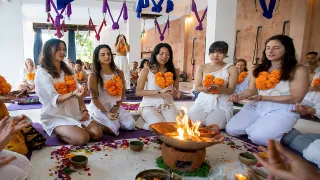
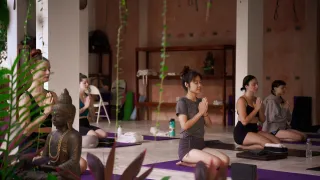
Terms explained
Short explanations of the terms used in this subject. General background, not the school's own text.
An introduction to the classical Sanskrit alphabet, vocal tract placements (varnas), and phonetic accuracy, exploring the historical concept of mantra as precise acoustic resonance.
The primordial seed syllable (Pranava Om) combined with three Shanti peace invocations, traditionally chanted to consecrate the training space, quiet sensory distraction, and set collective intention.
A revered hymn from the Rigveda honoring the solar light of consciousness (Savitur), recited rhythmically to awaken intellectual clarity, inner illumination, and spiritual discernment.
An ancient verse dedicated to Rudra-Shiva, traditionally recited in ashram settings.
Call-and-response devotional singing within a group setting, exploring how communal melody and rhythm shape group harmony.
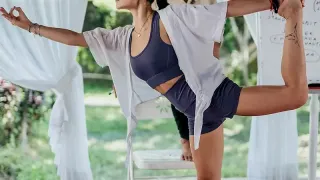
Terms explained
Short explanations of the terms used in this subject. General background, not the school's own text.
A comprehensive study of major synovial joints (hips, shoulders, spine, knees), connective tissue networks (fascia, tendons, ligaments), and prime muscular movers during weight-bearing yogic postures.
The scientific breakdown of thoracic and abdominal breathing, ribcage mobility, accessory respiratory muscles, and the gas-exchange threshold that underpins safe pranayama.
Understanding the interplay between sympathetic (active mobilization) and parasympathetic (rest, digest, and social engagement) nervous pathways.
Identifying high-stress anatomical areas—including lumbar discs, sacroiliac joints, rotator cuff tendons, and knee menisci—with cueing strategies for safer practice.
Recognizing structural bone compression versus soft tissue tension, and using blocks, straps, and bolsters to adapt classical postures to diverse body proportions, injuries, and flexibility ranges.
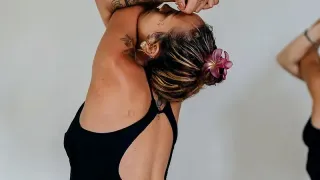
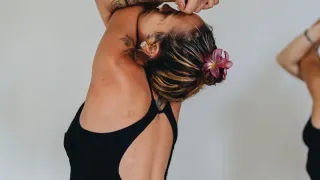
Terms explained
Short explanations of the terms used in this subject. General background, not the school's own text.
The architectural science of bodily foundation: ground contact points, joint stacking, neutral spine preservation, and proportional weight distribution across all posture categories.
The skill of delivering non-invasive, stabilising hands-on assists that help students sense directional alignment, without pushing them beyond natural joint ranges.
Modern studio standards for hands-on adjustments: verbal consent protocols, consent card systems, trauma-aware communication, and respecting personal bodily sovereignty at all times.
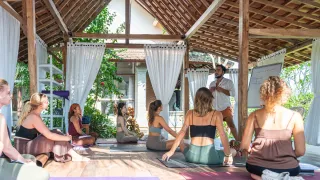
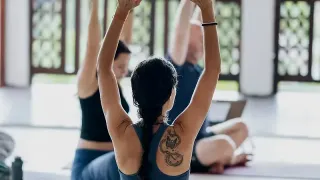
Terms explained
Short explanations of the terms used in this subject. General background, not the school's own text.
Training in vocal projection, pitch modulation, economical cue phrasing, and confident room navigation, ensuring every student feels seen and guided without visual ambiguity.
The structural design of a complete yoga class: establishing an opening focus, warming physiological systems, progressing to peak poses, safely neutralizing the spine, and facilitating restorative closure.
Structured sessions where trainees lead peer groups through prepared class segments, followed by supportive, objective feedback on voice clarity, cue timing, posture adjustments, and room presence.
The ethical foundations of the yoga teaching profession: maintaining healthy interpersonal boundaries, respecting student vulnerability, avoiding dual relationships, and cultivating inclusive spaces.
Practical industry guidance for new teachers: navigating Yoga Alliance registration (RYT 200), studio auditions, liability insurance requirements, ethical digital presence, and workshop organization.
How to incorporate blocks, straps, wall ropes, and bolsters into public classes, making advanced postures accessible and stable for all students.
Topics from the school's 200-hour page (read 15 October 2026), lightly shortened; pose names in standard spelling where known
The school publishes no hourly breakdown per subject, so none is shown.
Daily schedule
A sample day from the 200-hour yoga teacher training in Ubud, Bali.
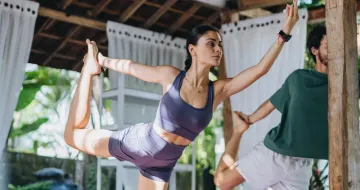
Pranayama is the yogic practice of breath control, described in the tradition as working with prana, the body's life-force. Paired with meditation, this first session of the day settles the mind before the physical practice begins.
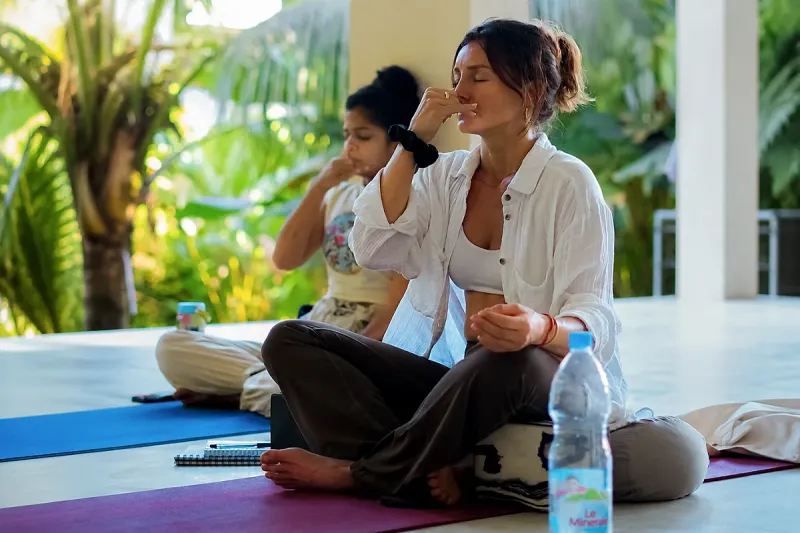
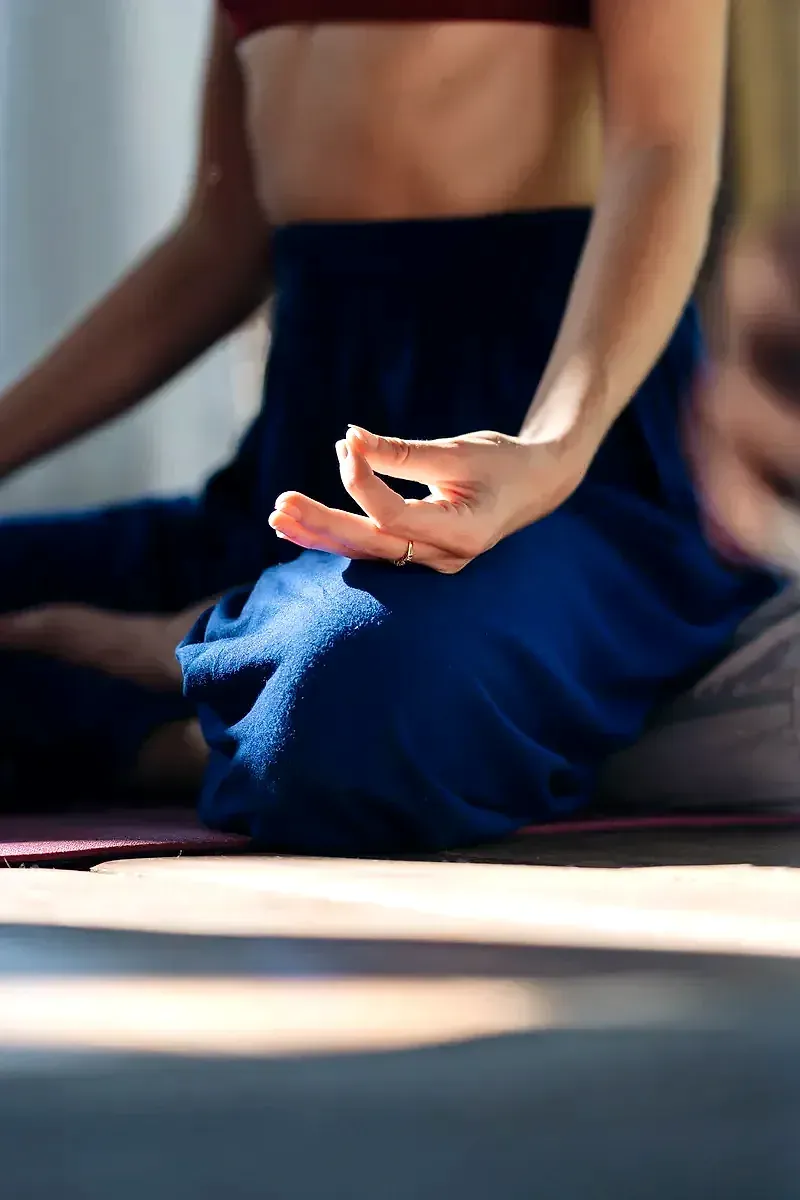
06:30 - 07:301 hr
Pranayama & Meditation
Breath control and meditation to start the day.
08:00 - 09:301 hr 30 min
Asana (Ashtanga)
The more vigorous of the day's two asana classes, in the Ashtanga style.
09:30 - 10:0030 min
Breakfast
Vegetarian breakfast after the morning's physical practice.
11:00 - 13:002 hr
Teaching Methodology, Anatomy & Physiology, Alignment
How to teach a class, how the body moves, and safe alignment.
13:00 - 14:001 hr
Lunch Break
A midday break; lunch is vegetarian.
14:00 - 15:301 hr 30 min
Rest or Self Study
Unstructured time to rest or review course material.
15:30 - 16:301 hr
Philosophy (History of Yoga, Yog Darshan)
The history of yoga and Yog Darshan: the 'why' behind the practice.
16:30 - 18:001 hr 30 min
Asana (Hatha)
A slower, hold-focused asana class in the Hatha style.
18:10 - 18:3020 min
Meditation & Kirtan
Quiet meditation and kirtan, call-and-response mantra chanting.
19:00
Dinner
The day's last meal, also vegetarian.
Rooms and three vegetarian meals a day come with every program at our partner school.
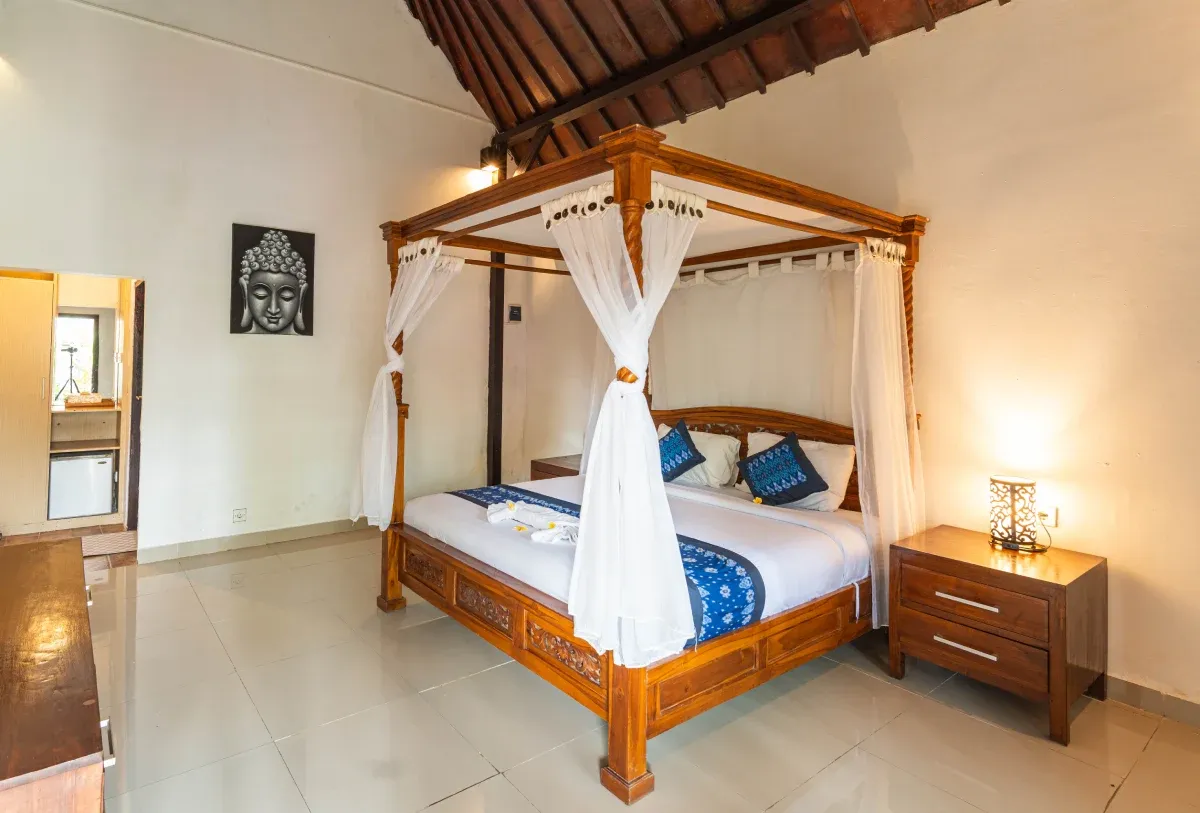
Room with a four-poster bed
Wooden bed with white drapes and a lamp
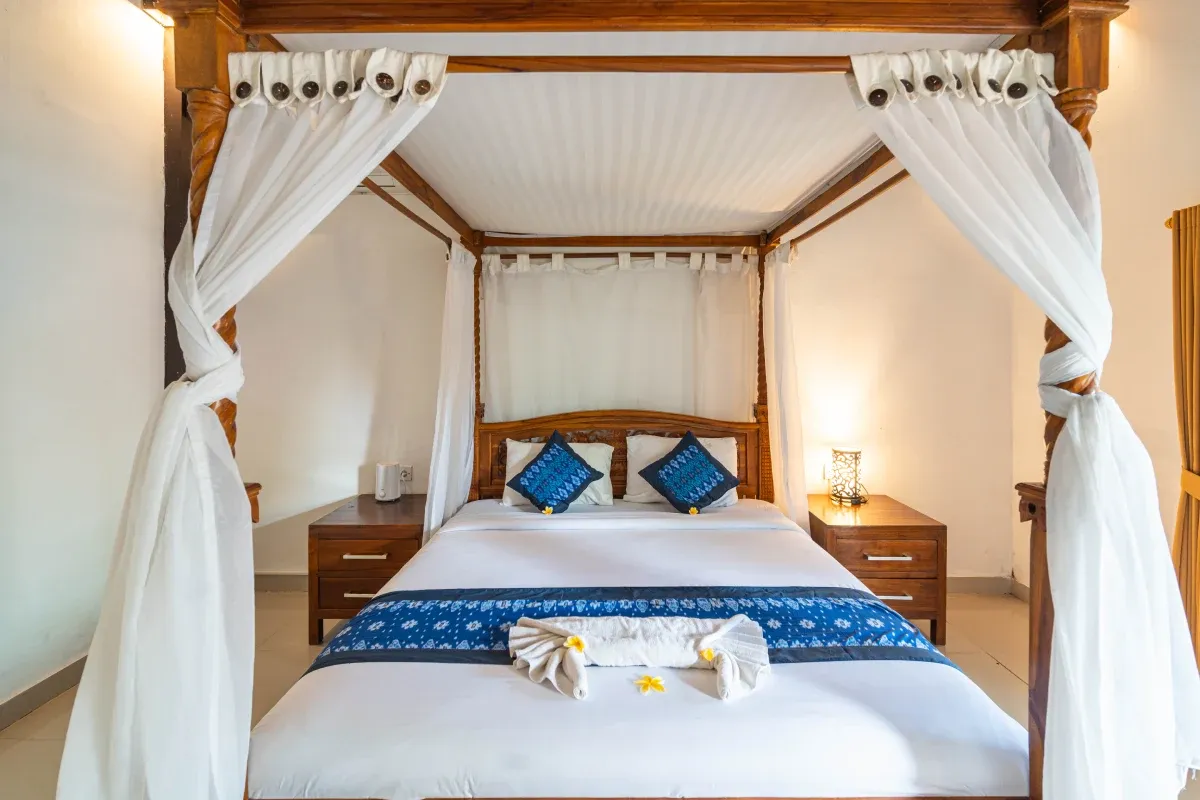
Four-poster bed, front view
Blue patterned cushions and bedside tables
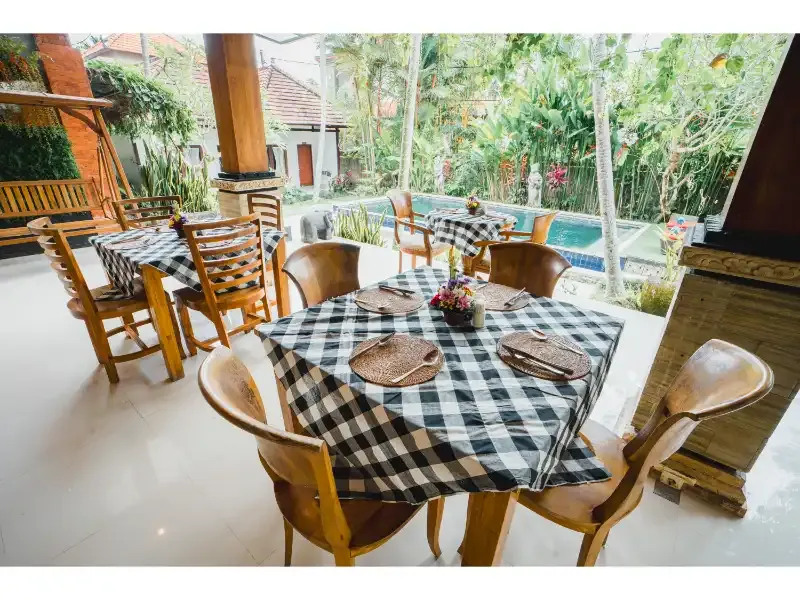
Terrace by the pool
Tables overlooking the pool and garden
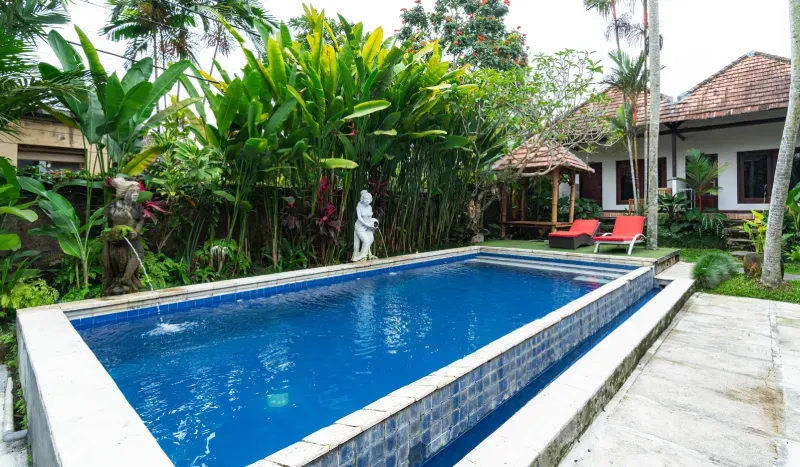
Pool and garden
A pool with a stone statue and tropical plants
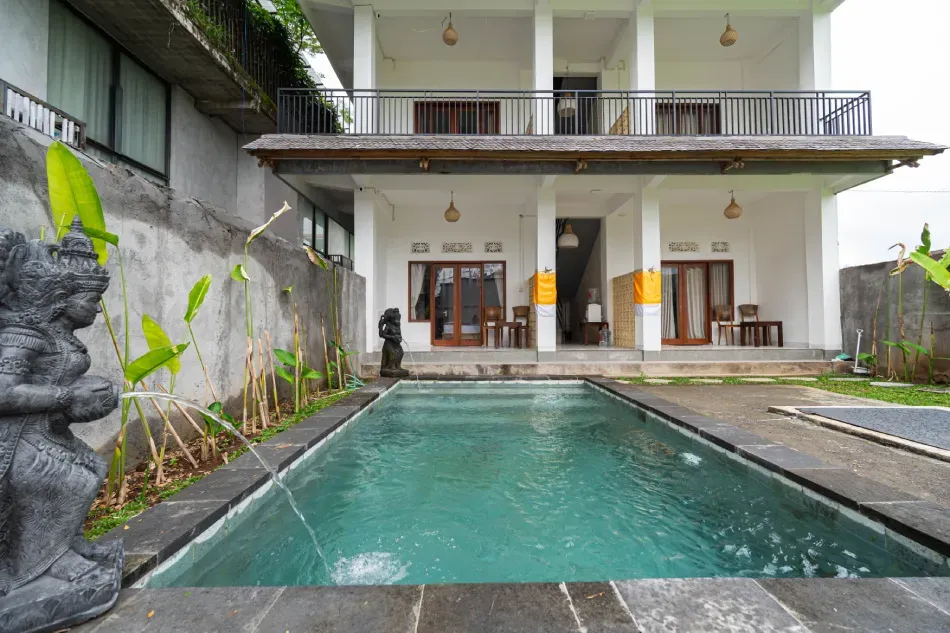
Courtyard pool
A pool in front of a two-storey building
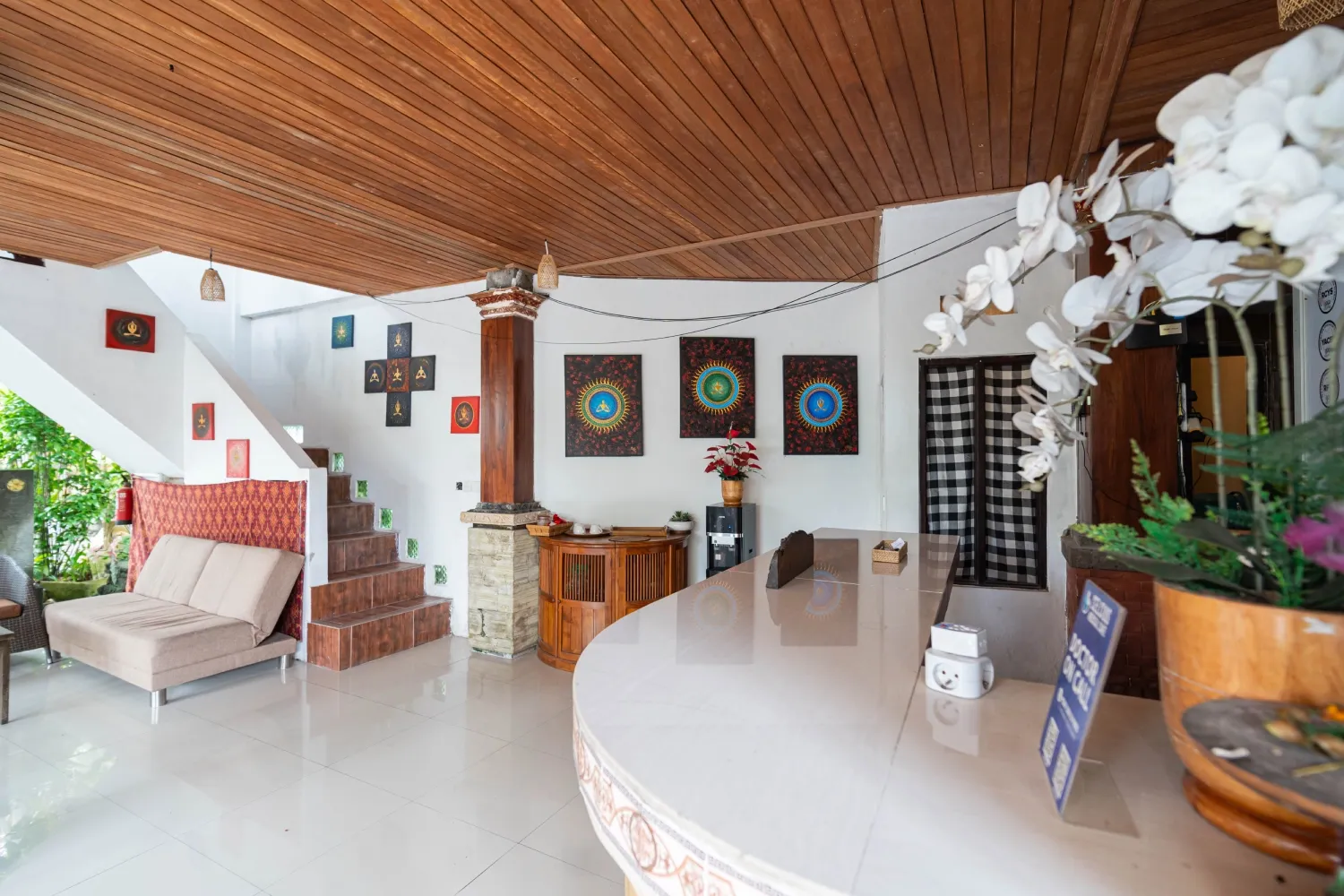
Reception and lobby
Wood-lined ceiling, seating and a front desk
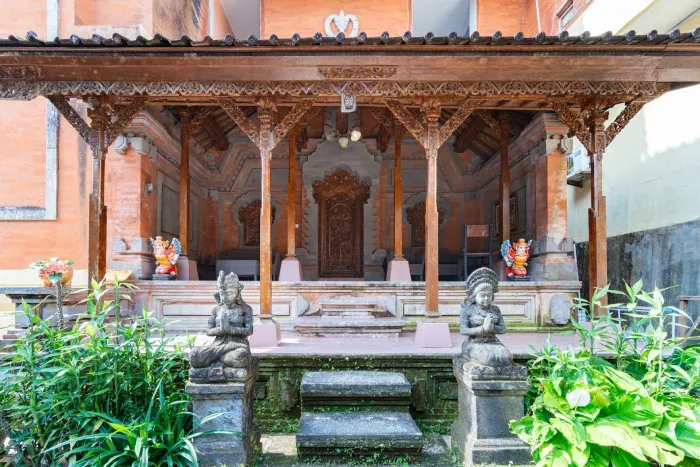
Carved wooden pavilion
Stone statues at the steps
You stay at the school in Ubud, in a private room or a twin shared room; the 200-hour course also has female-only shared rooms with bunk beds. Rooms have an ensuite bathroom and air conditioning, and Wi-Fi reaches the whole school.
Choose a private room, or share a twin room.
Every room has its own bathroom and air conditioning.
The school is in the town of Ubud, Bali.
A garden and a large pool on the grounds.
Not included: flights, visa fees, personal expenses, laundry services, additional excursion activities and medical expenses (the school's list). Ask us if something you need isn't on it.
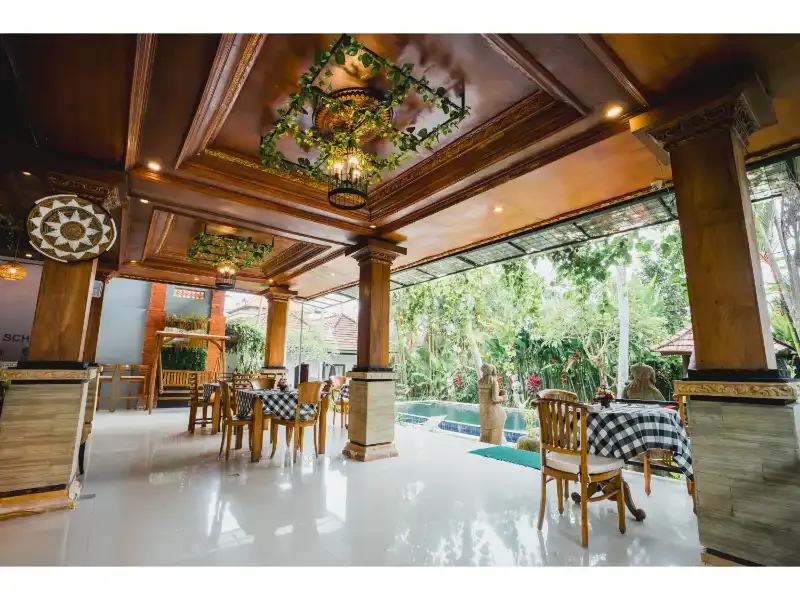
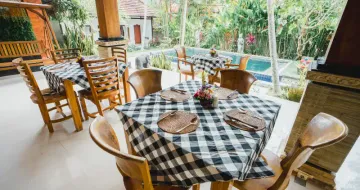
Covered dining area
Tables in an open pavilion by the pool
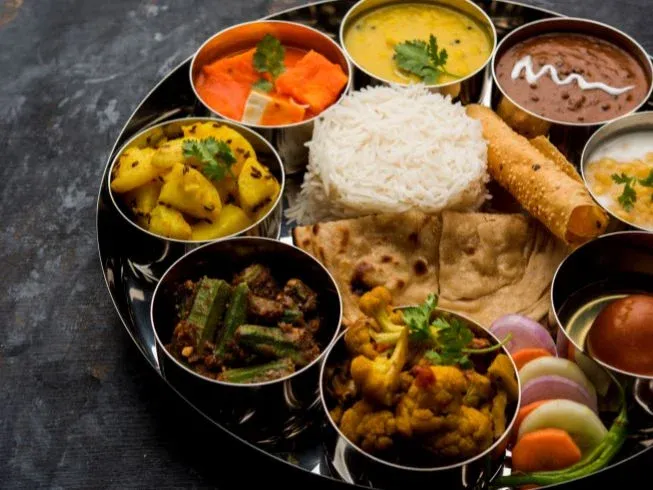
Example vegetarian plate
Rice, chapati, dal and curried vegetables
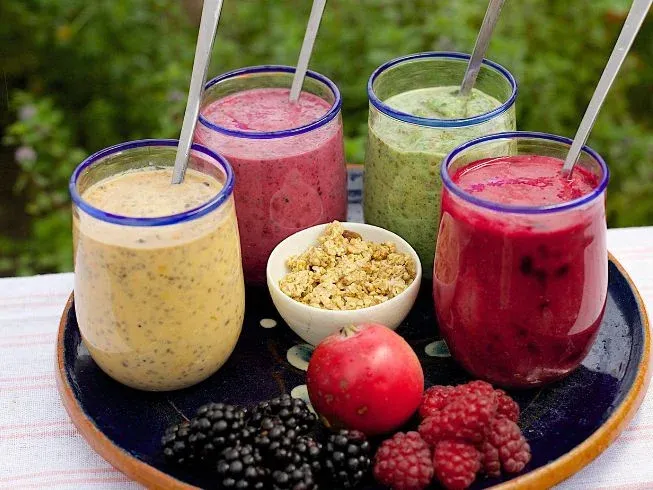
Example smoothies
Smoothies with granola and fresh fruit
Three vegetarian meals a day are included, with drinks. The school describes its food as sattvic and Ayurveda-inspired, cooked fresh daily.
Three vegetarian meals every day.
Water, tea, coffee and detox juices are included.
Made on request, like other dietary needs.
Seasonal vegetables and fruit, as described by the school.
Ask us for a sample menu before you book.
12 items are covered by the tuition and 6 are yours to arrange.
These lists come from the school's own 200-hour page, which the school pointed us to on 3 November 2026.
Includes 1 free night before or after the course
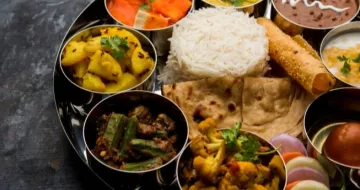
Cooked fresh on site daily
Printed manuals & study syllabus
DPS Ngurah Rai to the school
DPS Ngurah Rai to the school
Includes 1 free night before or after the course
Cooked fresh on site daily
Detox juices, infusions & drinking water
Special diets catered on request
Printed manuals & study syllabus
Mats, blocks, straps & bolsters provided
Neti pot & traditional kriya tools
Weekly temple & cultural outings
School graduation certificate
Eligible for RYT 200 registration
Swimming pool & tropical garden access
Visa rules and fees change. Check the official Indonesian immigration site before you travel.
From international flights and complimentary airport pickup to check-in and visa rules, here is everything you need to plan your journey to Ubud, Bali.
Denpasar, Bali
One-way airport pickup from DPS to the school is included in your tuition.
Most nationalities can enter Indonesia on a 30-day electronic Visa on Arrival (e-VOA) or obtain a VOA upon arrival at DPS airport, extendable once for another 30 days. Your passport must have at least 6 months validity.
The school includes 1 free night accommodation before the course starts or after checkout, giving you time to settle in and recover from jet lag.
Check-in from 12 PM, orientation with faculty, welcome circle and introductory opening ceremony before classes start.
Daily practice, philosophy, anatomy, methodology, and Saturday cultural excursions. Sundays are rest days.
Final certification ceremony and certificate presentation, followed by room checkout by 12 PM.
The school picks you up whenever you land; send it your flight details.
eSIMs work reliably in Bali; physical tourist SIM cards are also available at DPS airport arrival.
Located along Jl. Bisma, quiet and peaceful while walking distance to central Ubud cafes and shops.
Arrival details follow the school's 200-hour page and its answers to us (3 November 2026).
The school gives you its certificate. The Registered Yoga Teacher credential (RYT 200) is a separate step: you apply to Yoga Alliance yourself.
The school is registered with Yoga Alliance as a Registered Yoga School (RYS 200 and RYS 500).
You finish the course and receive the school's certificate.
If you want the Registered Yoga Teacher credential (RYT 200), you apply to Yoga Alliance yourself, with that certificate. Yoga Alliance decides the application.
Yoga Alliance checks the certificate for the school's registered name, the course level, your completion date and an authorised signature.
Registering as an RYT 200 is your own application to Yoga Alliance, and Yoga Alliance charges its own registration and membership fees. You pay them, not the school. Check the current amounts on yogaalliance.org before you apply. If the studios you want to teach at ask for teaching insurance, that is a separate cost too.
CORE FACULTY
The teachers at our partner school
Classes at Partner School Bali are led by its 4 teachers. Each profile below says what they teach.
Philosophy & Meditation Teacher
Ashram Parama Dhama (Denpasar)
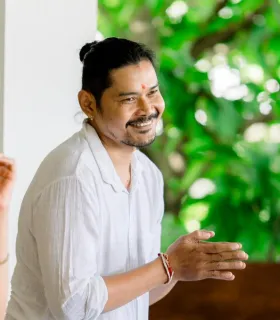
Yin Yoga Teacher
Slovakia
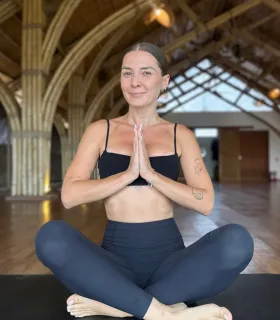
Qualified Kundalini Yoga Teacher
Samadhi Kundalini Yoga Ashram

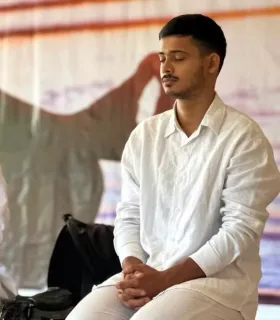
Ashtanga Vinyasa Teacher
Compare prerequisites, yoga styles, credentials and course length.
Choose the training pathway that matches your practice and teaching goals.
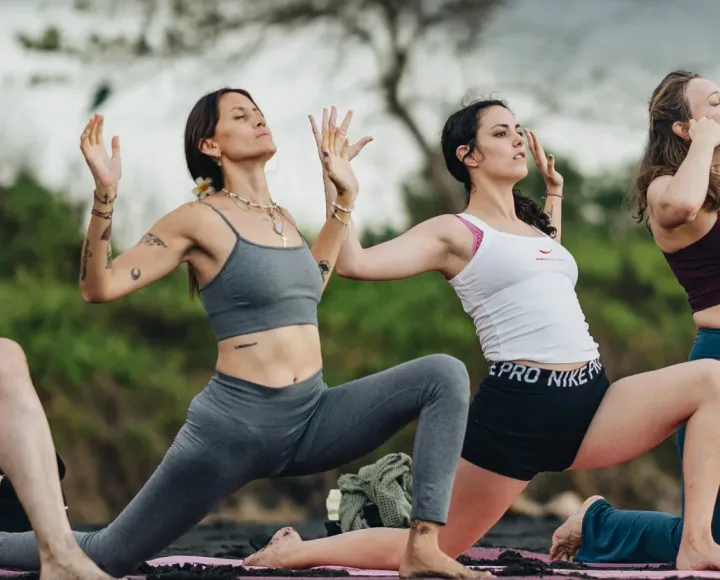
Explore & Deepen · Hatha, Vinyasa, Philosophy
No prior experience needed
Asana, pranayama and the basics of yoga philosophy
The school's certificate of completion, not a Yoga Alliance credential
Includes accommodation, three vegetarian meals a day, airport transfer from DPS, course materials and certification.
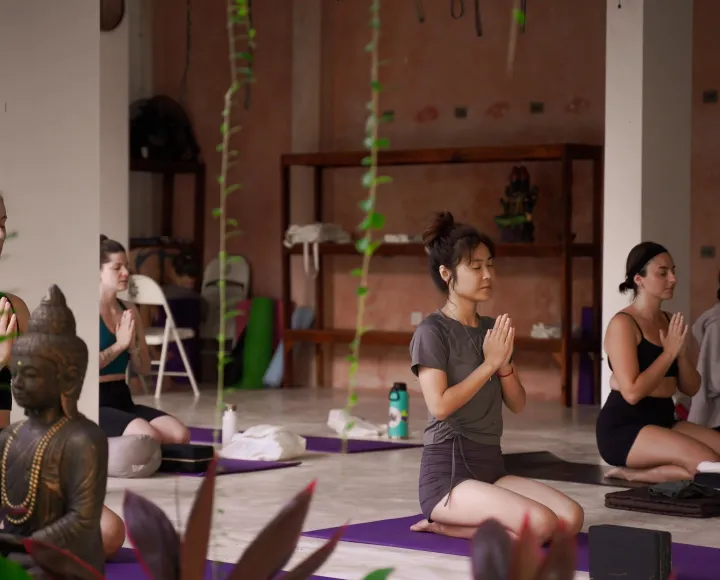
Learn to Teach · Hatha, Vinyasa, Ashtanga
No prior experience needed
Hatha, Vinyasa and Ashtanga, with pranayama, anatomy, mantra chanting and teaching methodology
The school's certificate; you apply to Yoga Alliance yourself for RYT 200
Includes accommodation, three vegetarian meals a day, airport transfer from DPS, course materials and certification.
Advance Your Practice · Advanced Hatha, Vinyasa, Meditation
No 200-hour certificate needed
Anatomy, alignment and teaching practice, after a 200-hour or straight away
The school's certificate of completion; RYT 500 eligibility is the school's claim, not confirmed
Includes accommodation, three vegetarian meals a day, airport transfer from DPS, course materials and certification.
About this course
Straight answers about this course. For anything else, ask us.
Yoga Alliance doesn't certify schools, it registers them. Our partner school in Bali is a Registered Yoga School (RYS 200 and RYS 500) with Yoga Alliance. You can verify this directly on the Yoga Alliance register.
Yoga Alliance's RYT 200 credential is based on a 200-hour training at a Yoga Alliance registered school. Studios set their own hiring requirements, so check with the ones you want to teach at.
If you register with Yoga Alliance as an RYT 200, you apply yourself and pay Yoga Alliance's own registration and membership fees. The school doesn't charge them. Teaching insurance, if the studios you work with ask for it, is also your own cost. Current amounts are on yogaalliance.org.
Not for the 100-hour or 200-hour course: no prior experience is needed. The 300-hour course requires a 200-hour teacher training certificate from any school.
To book, you pay an advance to the school by PayPal: USD 300 for each course. It comes off the course fee. You pay the rest at the school when you arrive, in cash or by card.
Flights, visa fees, personal expenses, laundry services, additional excursion activities and medical expenses are not included in the course price. The home page has an estimate of the total trip cost, under real cost, with flights, visa and extras marked as estimates.
No. The referral fee is paid by the school, not by the student. You pay exactly the same price as you would by booking directly with the school — not a cent more.
You pay the school directly. We are a referral site: the school pays us a fee when you enrol or book a retreat, and you pay the same price as booking direct.
Same price as booking direct
Planning your Bali yoga journey?
Which training, which dates, which room — ask us and we'll help you work it out.
Common questions we can help with
No booking pressureNo cost to you